
319
Groups
Independent international visitor groups interviewed on site.
A user research and service design project exploring how international visitors navigate, understand, and make decisions within a historic Chinese water town.
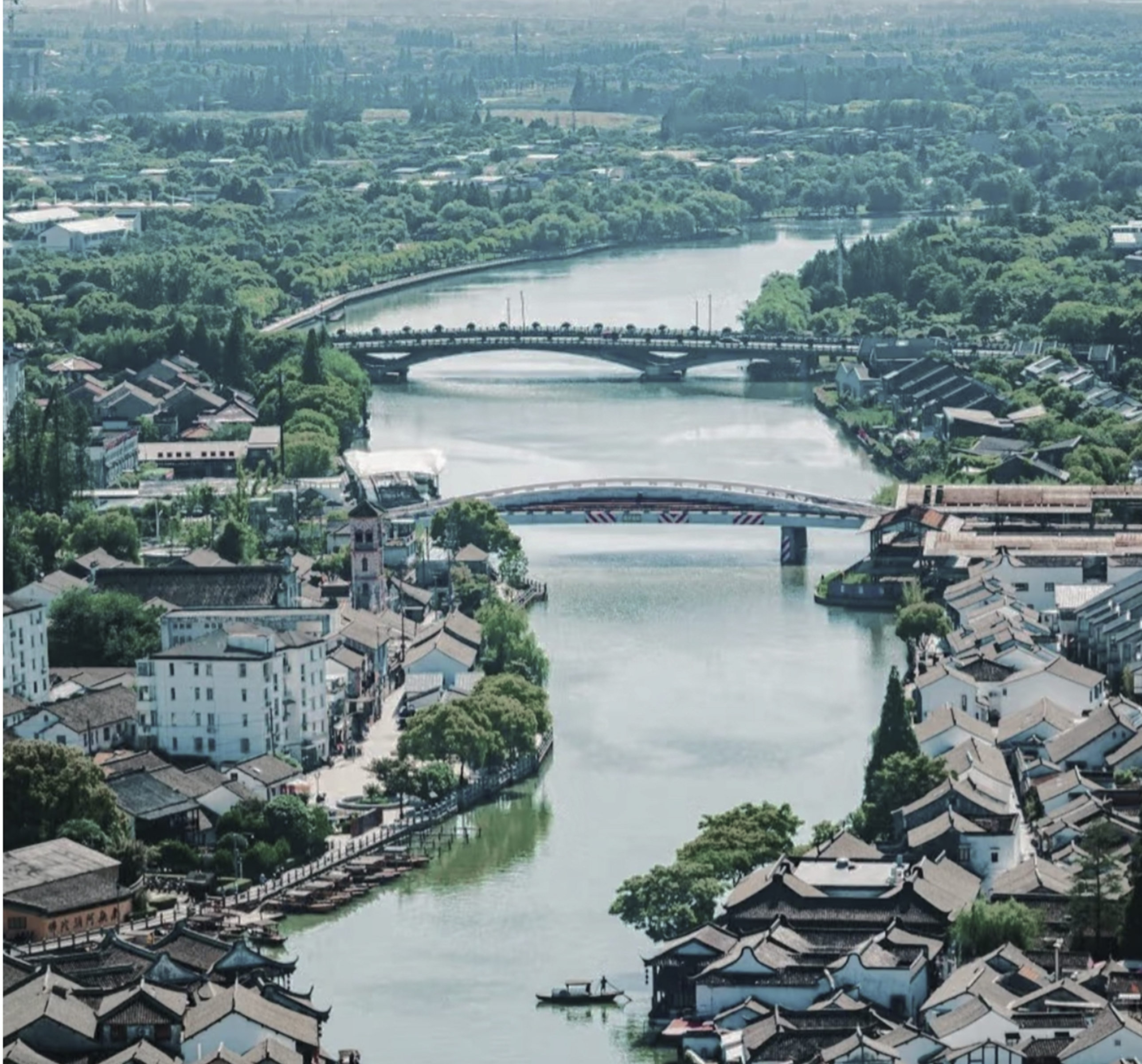
ScrollZhujiajiao is one of the most representative historic water towns near Shanghai and is often included as the first stop for international visitors seeking to understand traditional Chinese water-town culture.
Unlike local visitors, international travelers rely heavily on digital information systems to plan routes and make decisions during their visit. At the same time, many visitors lack prior understanding of the local language, spatial structure, and cultural context.
This makes Zhujiajiao a valuable setting for studying how visitors navigate unfamiliar environments and build an understanding of place through both physical and digital information.
319
Groups
Independent international visitor groups interviewed on site.
562
Visitors
Total number of individual visitors represented.
额外信息
The study included international visitors from 54 countries and regions. Visitors aged 20–40 formed the largest participant group.
Most participants were independent travelers with strong self-guided exploration habits. They frequently relied on search engines, maps, social media, and travel platforms to plan routes and evaluate destinations.
87.7% of participants traveled independently, meaning their experience was shaped less by fixed tour routes and more by the real-time interaction between individual decisions and the scenic area's public service system.
Only 21.7%
of visitors explored more than 70% of the major scenic locations.
3.5 / 7
was the average number of major attractions visited by interviewed participants.
“Didn't know it existed”
was the main reason visitors missed key destinations, accounting for 67%.
International visitors are not lacking places to explore.
They lack a connected system that helps them understand where to go, why a place matters, and how to continue their journey.
The existing visitor experience is fragmented across physical space, cultural information, and digital navigation. Visitors must independently combine disconnected sources while moving through an unfamiliar environment.
As a result, many visitors concentrate around a small number of highly visible locations and miss a large part of the scenic area's cultural and spatial experience.
Insight 01
Visitors struggled to form a complete mental model of the scenic area. Their routes were often compressed around a few central locations.
Insight 02
Cultural and historical information was fragmented or difficult to interpret, reducing visitors' understanding of why each destination mattered.
Insight 03
Navigation tools were disconnected from the scenic area's service and interpretation systems, making reliable route and destination information difficult to access.
How might we create a connected digital guide that helps international visitors understand the overall spatial structure, discover meaningful cultural stories, and make confident decisions throughout their journey?
Help visitors quickly understand the complete structure of the scenic area and reduce the cost of getting lost or missing destinations.
Potential directions
Help visitors understand why each location matters and deepen cultural engagement.
Potential directions
Help visitors make decisions while moving through the scenic area.
Potential directions
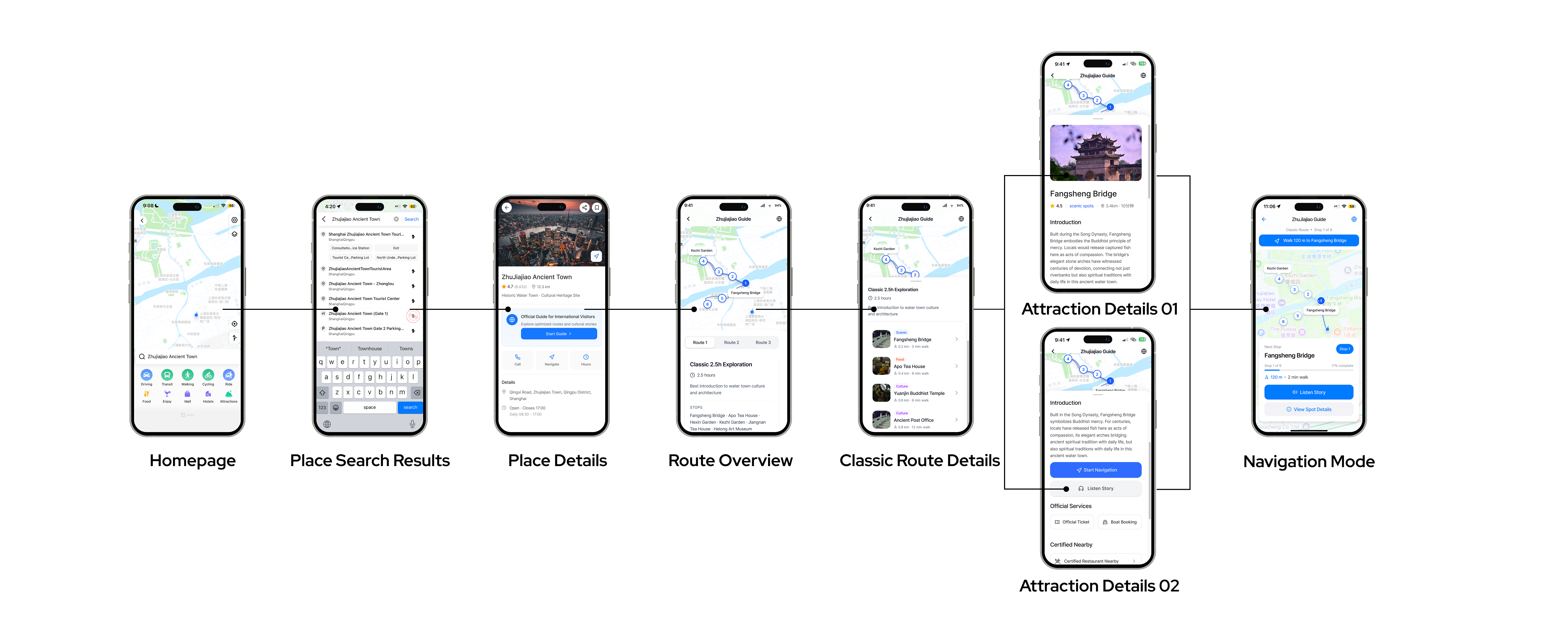
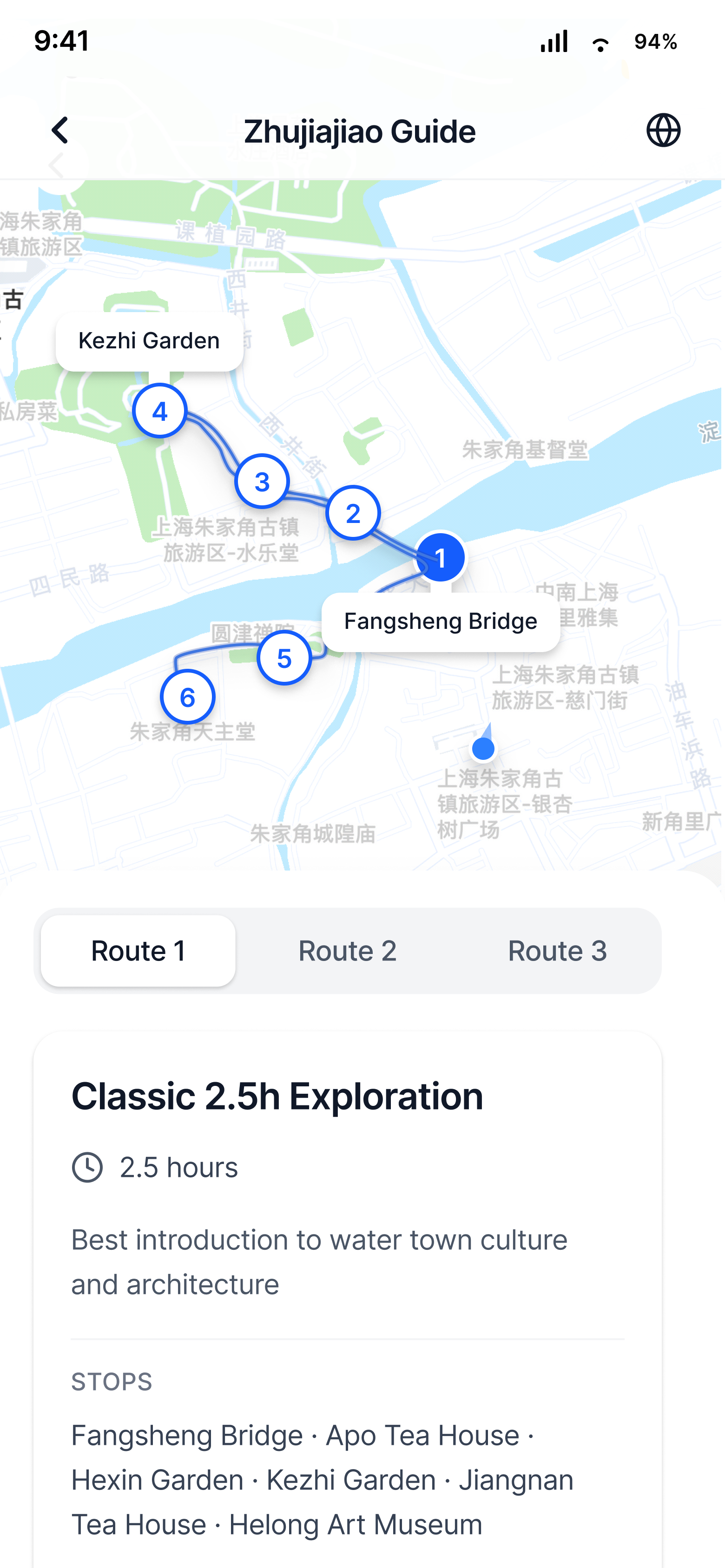
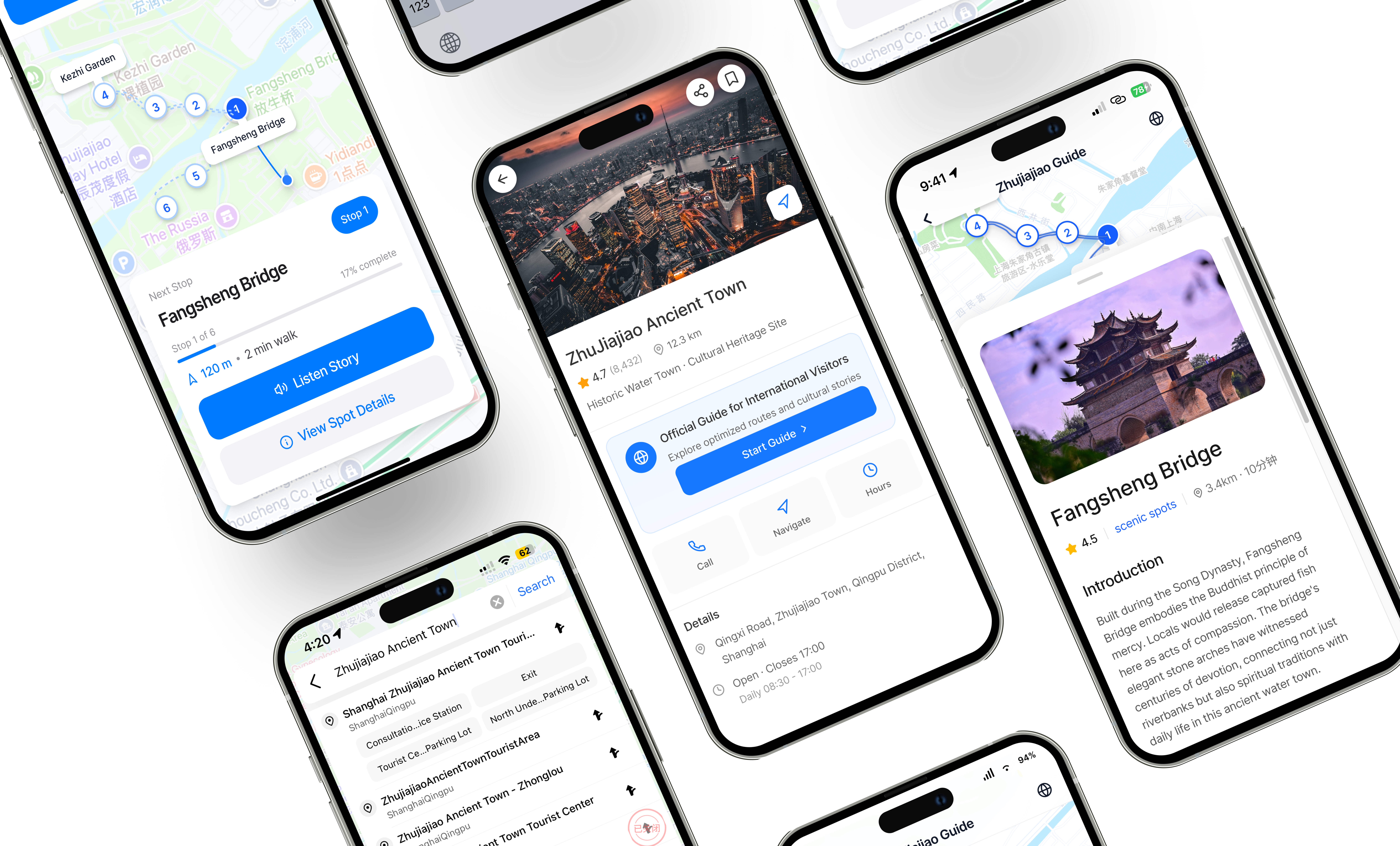
Visitors can choose from curated routes based on available time and travel interests. Each route combines Zhujiajiao’s key scenic, food, and cultural destinations, helping visitors quickly understand the area and select a suitable journey.
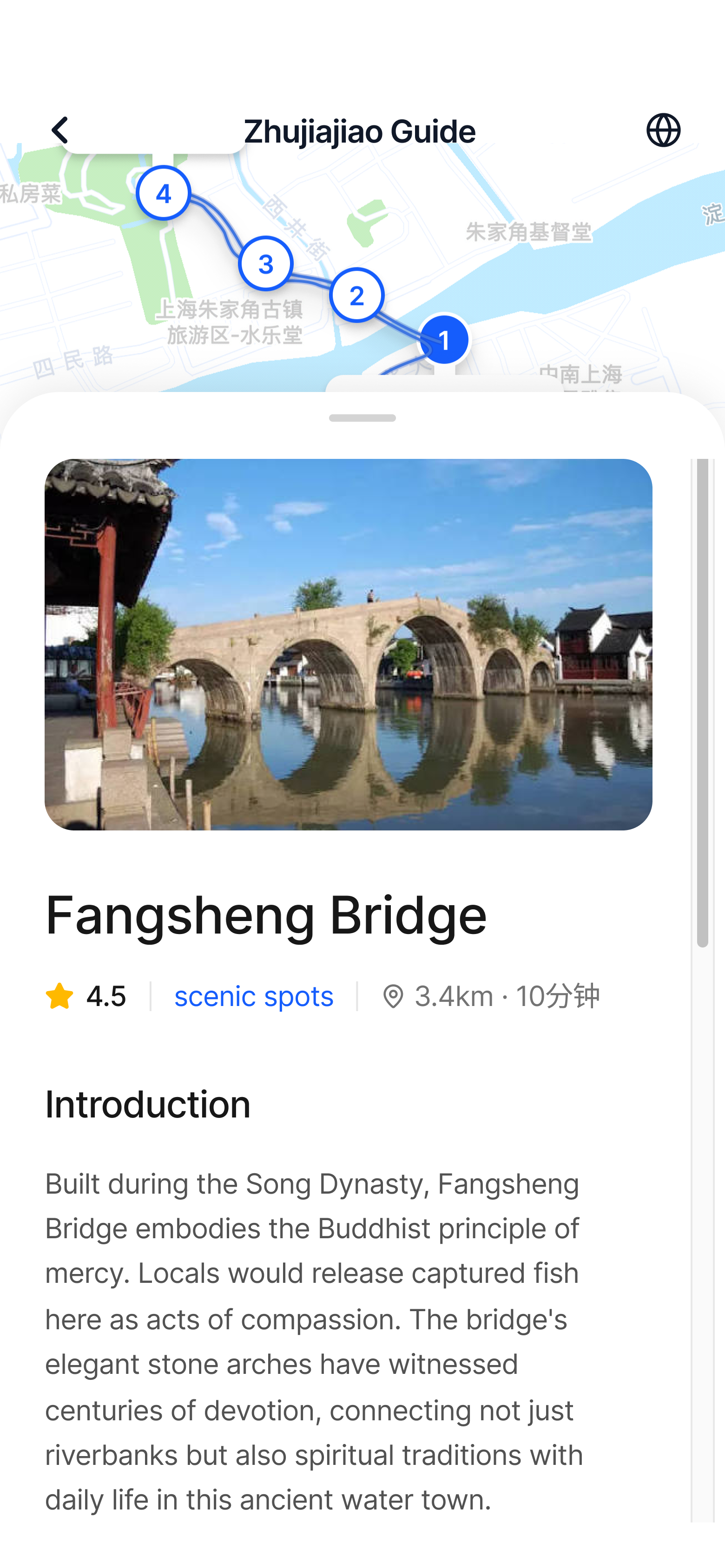
Each attraction transforms historical and cultural information into clear, engaging stories that visitors can listen to while exploring. The page also integrates official ticketing, boat booking, and certified nearby recommendations in one place.
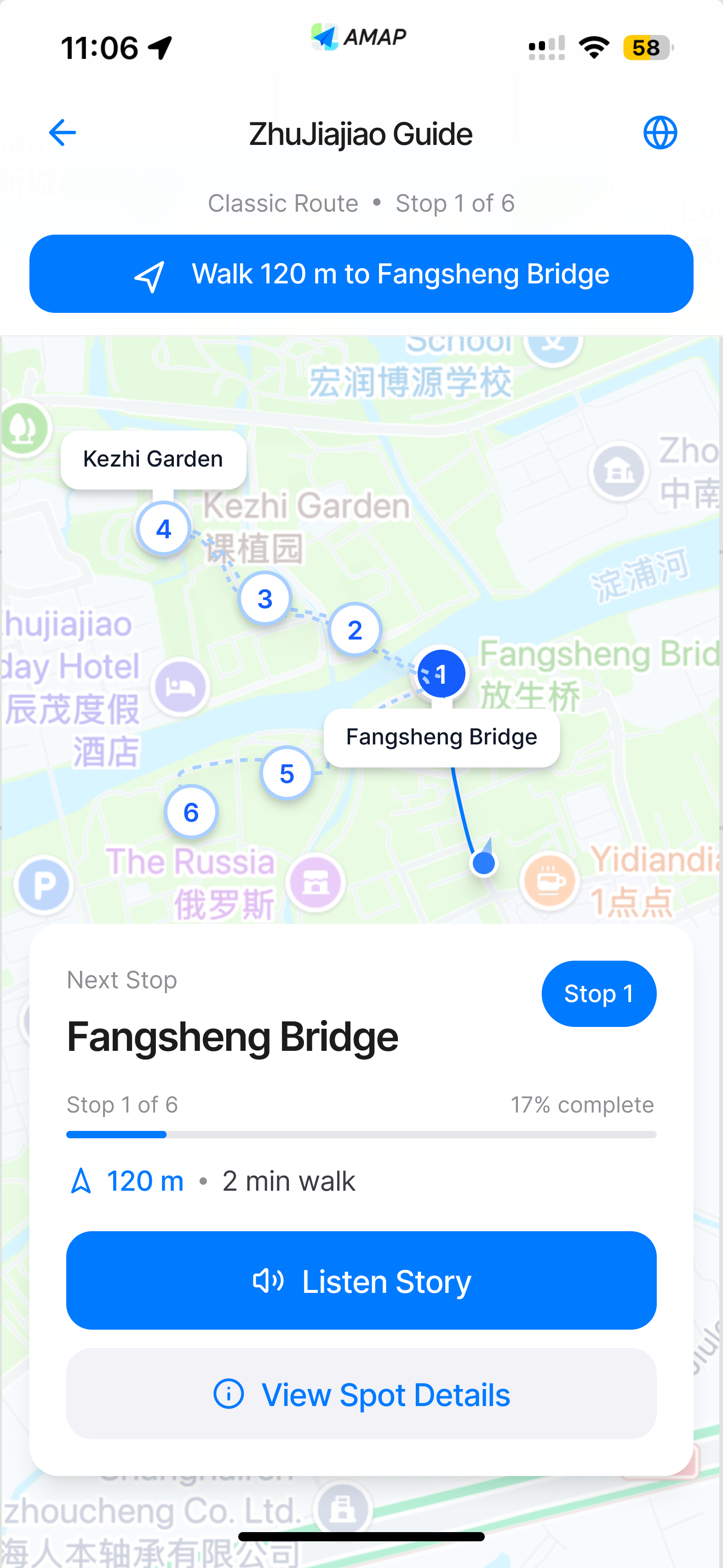
The navigation mode provides a clear and focused interface that helps visitors understand where they are, where to go next, and how to adjust their journey in real time.
This project strengthened my ability to translate large-scale field research into a structured experience strategy.
Rather than treating navigation, cultural interpretation, and service information as separate problems, I learned to examine how they interact throughout the complete visitor journey.
The project also showed that improving a tourism experience is not only about adding more information. The greater design challenge is helping visitors understand the right information at the right moment and use it to make confident decisions.