Omega-3 Community System

A community-based circular system connecting household food waste, algae cultivation, and sustainable Omega-3 production.

Category
System Design + UX/Product Design
Focus
Gamification + Sustainable Nutrition Ecosystem
Role
UX/Product Designer
Methods
System Mapping / Experience Design
Scroll
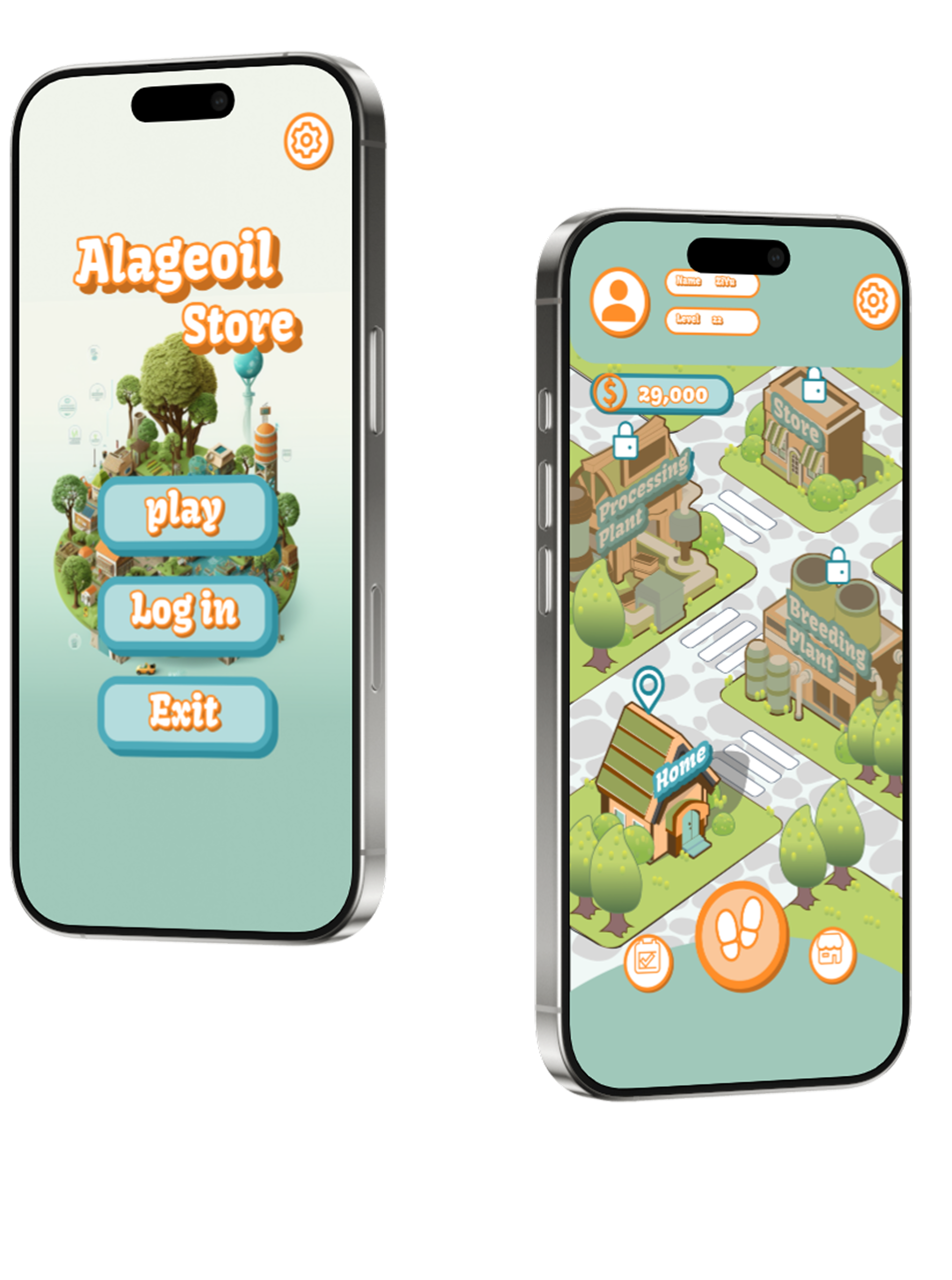
Omega-3 mobile app homepage mockups showing the Alageoil Store start screen and community map.

Omega-3 Community System

This project redesigns the traditional Omega-3 supply chain by exploring a sustainable alternative to fish oil production.

Currently, Omega-3 production relies heavily on marine resources, creating concerns around seafood safety, resource consumption, and ecological pressure.

This project proposes a community-based circular system that connects household food waste, algae cultivation, and Omega-3 production.

experience loop

real-world behaviorvirtual productionphysical reward

residents participate in sustainable nutrition production while building awareness of alternative Omega-3 sources.

Research Highlights

Omega-3 is an essential nutrient deeply connected to people's daily diets.

However, most Omega-3 products still depend on fish oil as the primary source, creating tension between nutritional needs and marine ecosystem protection.

This project explores:

  • How to reduce dependence on traditional fish oil supply chains
  • How to help consumers understand alternative Omega-3 sources
  • How design can encourage participation in sustainable production systems
Chart showing health areas connected to Omega-3 nutrition, including brain, mental health, eye, mood, heart, and intestinal health.
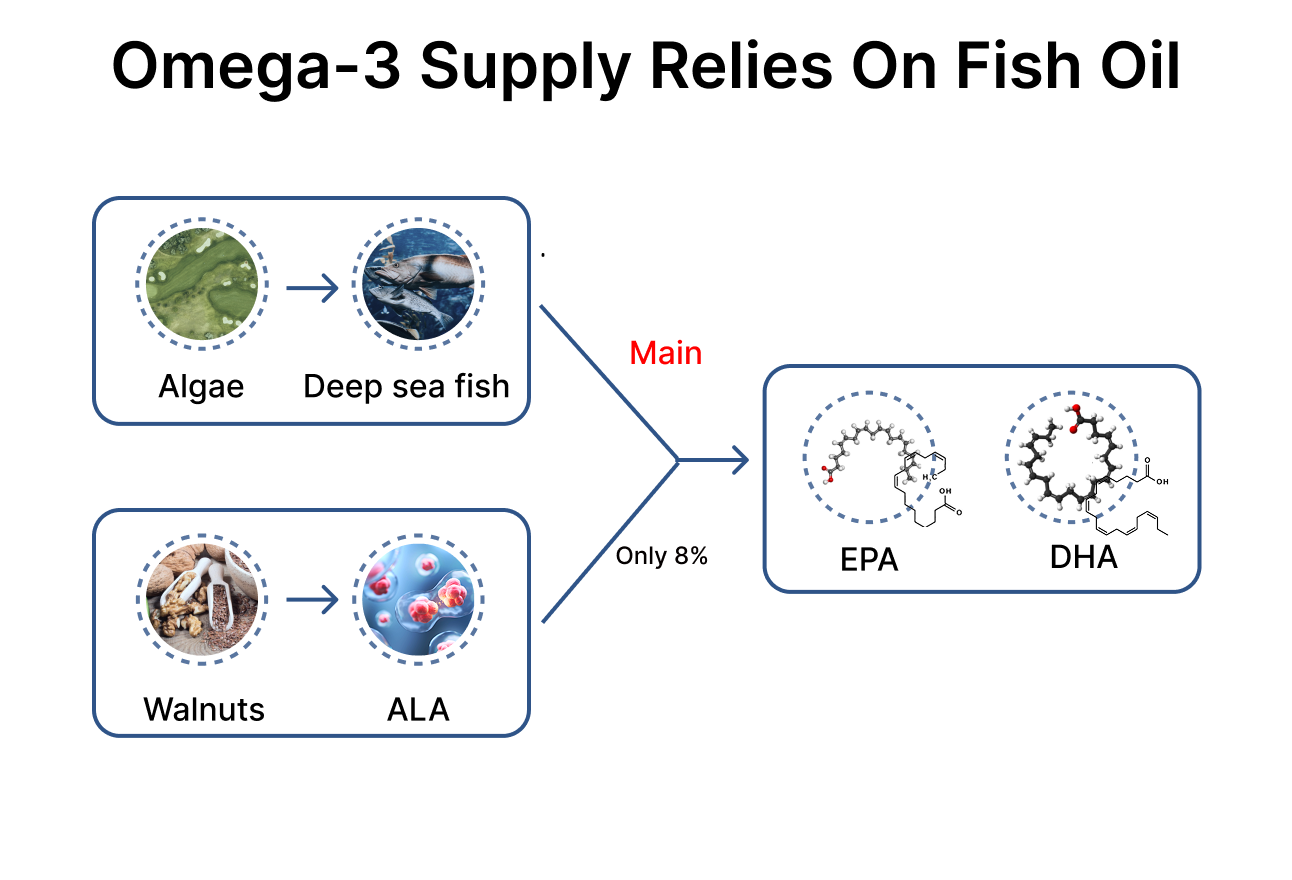
Diagram showing Omega-3 supply relying on algae to deep sea fish for EPA and DHA, compared with walnuts to ALA.
Line chart showing the fish oil supply chain is not sustainable through fishery production trends.

Problem Statement

The current Omega-3 system separates consumers from the production process.

When purchasing Omega-3 products, users rarely understand:

  • Where Omega-3 comes from→ Omega-3 comes from algae
  • How production affects marine ecosystems
  • Whether more sustainable alternatives exist

The challenge is not only developing a new production method, but also designing an experience that allows people to understand and participate in a sustainable ecosystem.

Sustainable Omega-3 nutritional supply system diagram connecting algae cultivation, fish oil pressure, alternative carbon sources, production, and user participation.

Design Opportunity

How Might We Create A Community-Based Circular System That Transforms Daily Waste Behavior Into Sustainable Omega-3 Production?

Research Process

From ecological systems to user experiences.

Research Methods:

System Mapping

Mapping traditional and alternative Omega-3 supply chains.

  • Marine resources -> Fish oil production -> Consumer nutrition
  • Kitchen waste -> Algae cultivation -> Omega-3 production

Ecosystem Exploration

Exploring food waste recycling systems, algae-based Omega-3 production, community participation models, and sustainable consumption behaviors.

Experience Design

Transforming complex ecological systems into user tasks, gamified feedback, community rewards, and mobile interaction experiences.

Key Insights

Insight 01

Sustainable systems are invisible to consumers.

Users often only see the final product and cannot understand the production process behind it. Design needs to visualize hidden ecological systems and connect user actions with environmental impact.

Insight 02

Environmental behaviors require meaningful feedback.

Sustainable actions need visible outcomes. Users need to understand: My action -> System change -> Real value.

Insight 03

Complex ecological systems need simple interaction models.

Design should translate complex supply chains into understandable and participatory experiences.

How Might We

How might we transform everyday household behaviors into meaningful participation in sustainable nutrition production?

Solution

A community-based circular Omega-3 ecosystem.

Transform consumers from passive buyers into active participants in the ecological system.

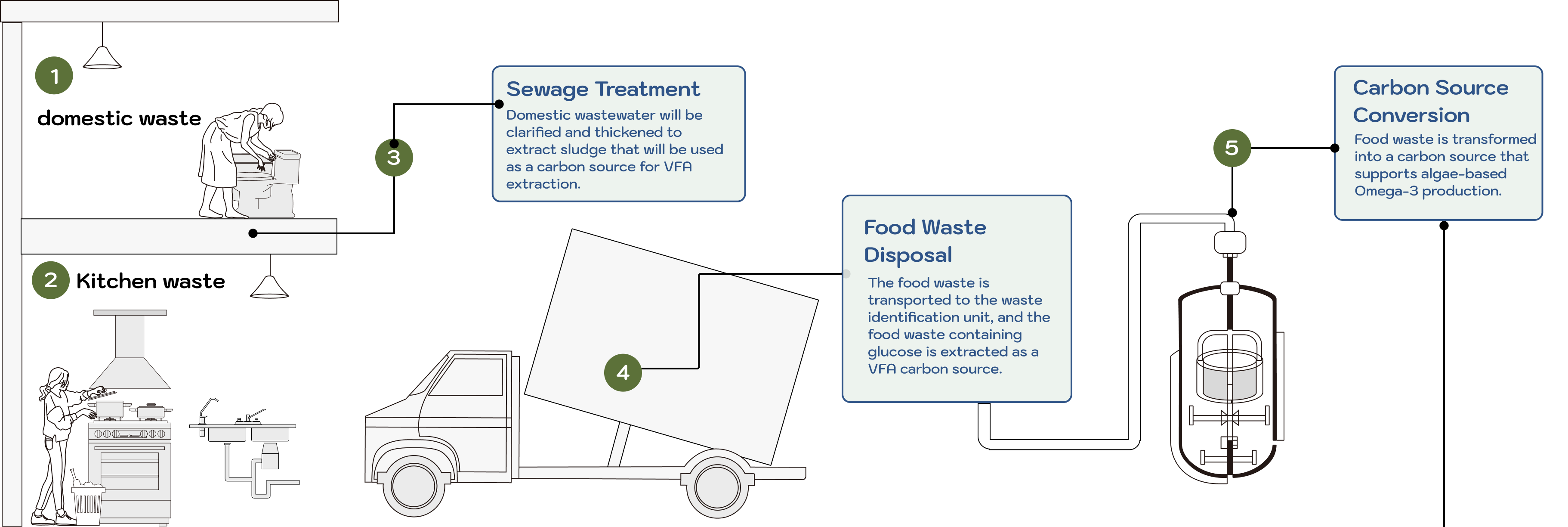
System overview showing household waste, sewage treatment, food waste disposal, and carbon source conversion for algae-based Omega-3 production.
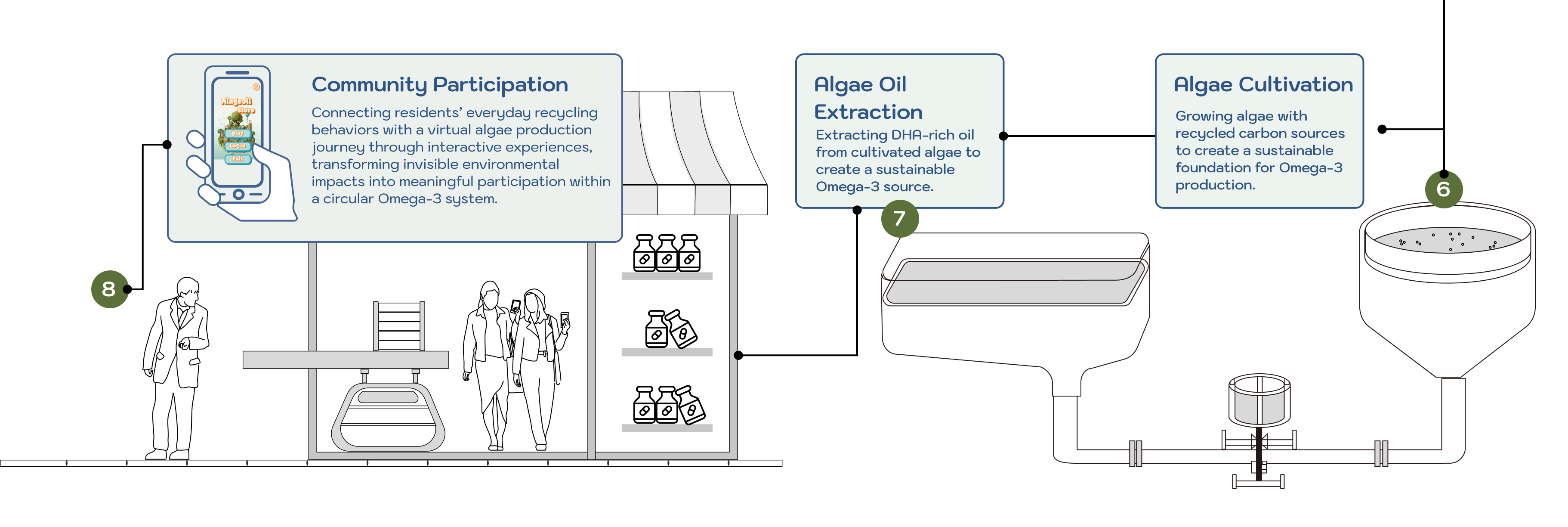
System map showing community participation, algae oil extraction, and algae cultivation in the Omega-3 circular system.

User Flow

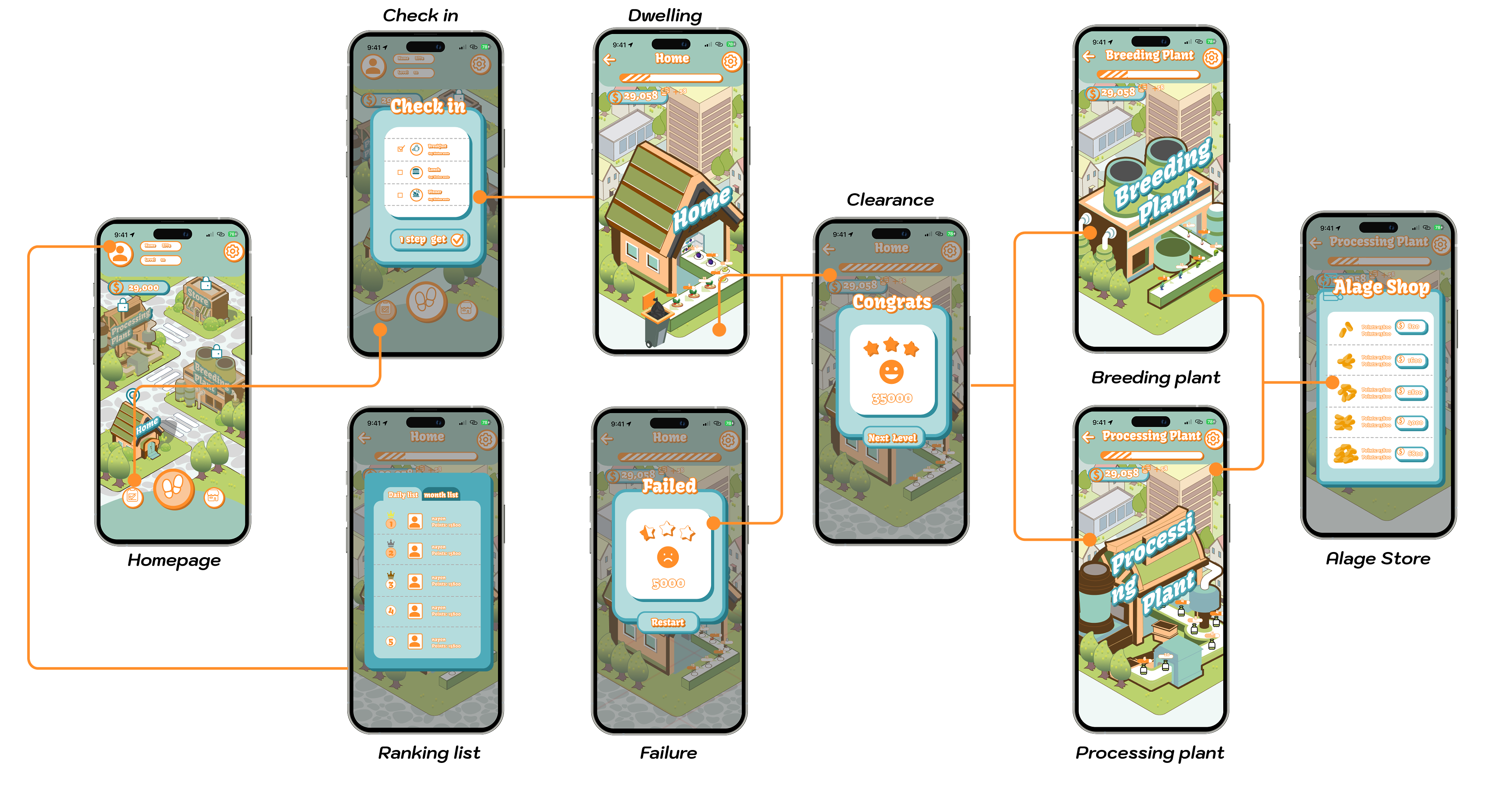
This user flow translates a complex circular Omega-3 supply chain into a participatory community experience. Through food-waste check-ins, transparent production tracking, collective challenges, and point-based rewards, residents can understand how their everyday actions contribute to algae cultivation and sustainable Omega-3 production.

Omega-3 mobile app user flow showing check-in, home, rewards, breeding plant, processing plant, and algae shop screens.

Interface Overview

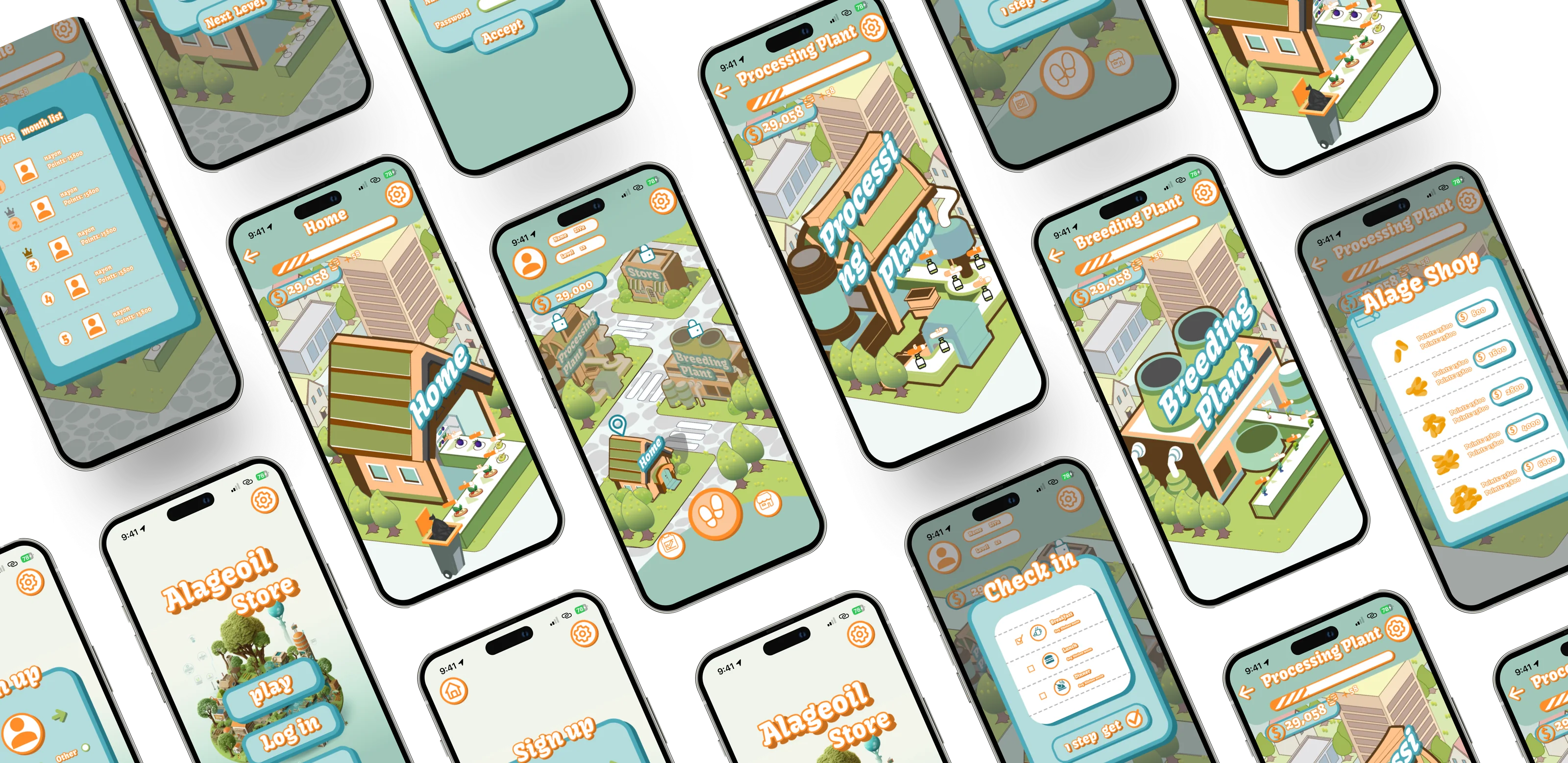
Omega-3 mobile app interface overview showing multiple app screens across the experience.

Reflection

This project shifted my perspective from designing individual experiences to designing relationships within larger systems.

Through Omega-3 Community System, I explored how complex ecological systems can be transformed into experiences that people understand, participate in, and sustain over time.

Design can not only improve interactions between users and products, but also reconnect people with larger environmental systems.