

Between Care and Self

An AI-assisted decision support concept helping Chinese immigrant nurses understand difficult workplace situations and decide if, when, and how to speak.

Category
Human-AI Interaction + Healthcare UX
Focus
Trustworthy AI + Communication Decision Support
Role
UX Researcher / Product Designer
Methods
Interviews / Questionnaire / Prototype Testing
Scroll
Between Care and Self project icon showing a protective hand form with the project name.

Overview

Between Care and Self explores how Chinese immigrant nurses navigate communication uncertainty in New York City healthcare workplaces.

In urgent and hierarchical environments, communication is not simply about speaking English correctly. Nurses must judge what to say, when to say it, how directly to communicate, and what speaking might cost them.

This thesis explores how design—and later AI—might support nurses before these difficult communication decisions are made.

Research Highlights

83%

Identified communication and cultural navigation as their most significant professional challenge.

“My English is good enough — but I’m not sure if I should speak up.”

Overall, I gathered input from approximately 20 nurses and one advisor, including three senior RN supervisors with more than 20 years of experience and several staff nurses across different clinical units.
Research Methods

One-on-One Conversations

Individual conversations surfaced specific experiences of hesitation, misunderstanding, hierarchy, and workplace risk.

Open-Ended Questionnaire

Participants were asked: “What are your top three to five challenges as a Chinese nurse in New York City?” Their answers provided a consistent basis for comparing recurring challenges.

Community-Centered Research

The research was conducted through trusted community relationships, including connections with the Chinese American Nurses Association and experienced nurse advisors.

Key Insights

INSIGHT 01

Communication & Cultural Navigation

Communication challenges extended beyond English to asking for help, advocating for personal needs, understanding workplace norms, and navigating hierarchy.

INSIGHT 02

Staffing Shortages & Workload Pressure

High patient ratios, overlapping admissions and discharges, and limited staff support reduced time for patient care and increased physical and mental strain.

INSIGHT 03

Workplace Safety & Exposure to Violence

Aggressive patients, verbal and physical abuse, mental-health crises, and limited institutional backup created serious safety risks in inpatient settings.

Research Synthesis

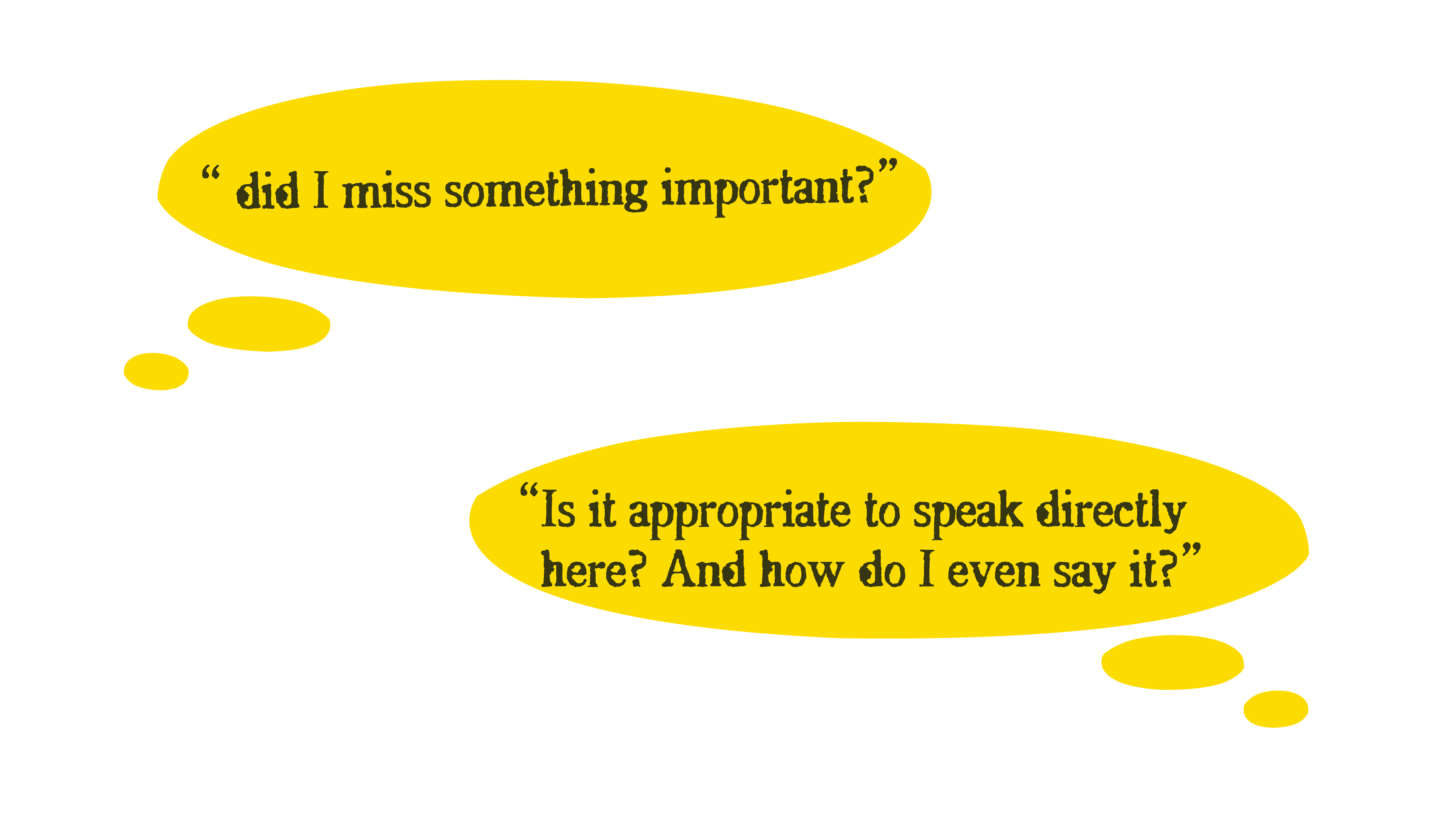
The barrier was not simply English proficiency. It was the uncertainty and risk attached to speaking.

Many participants could communicate in English. The deeper difficulty was deciding whether a concern was appropriate to raise, how directly it could be expressed, and what consequences might follow.

Their uncertainty was not only linguistic. It was also cultural, relational, and hierarchical.

Two yellow thought bubbles on a black background asking whether something important was missed and whether it is appropriate to speak directly.

Underlying Factors

Voice is a form of power.

In healthcare, communication determines whose knowledge, concerns, and needs enter the decision-making process.

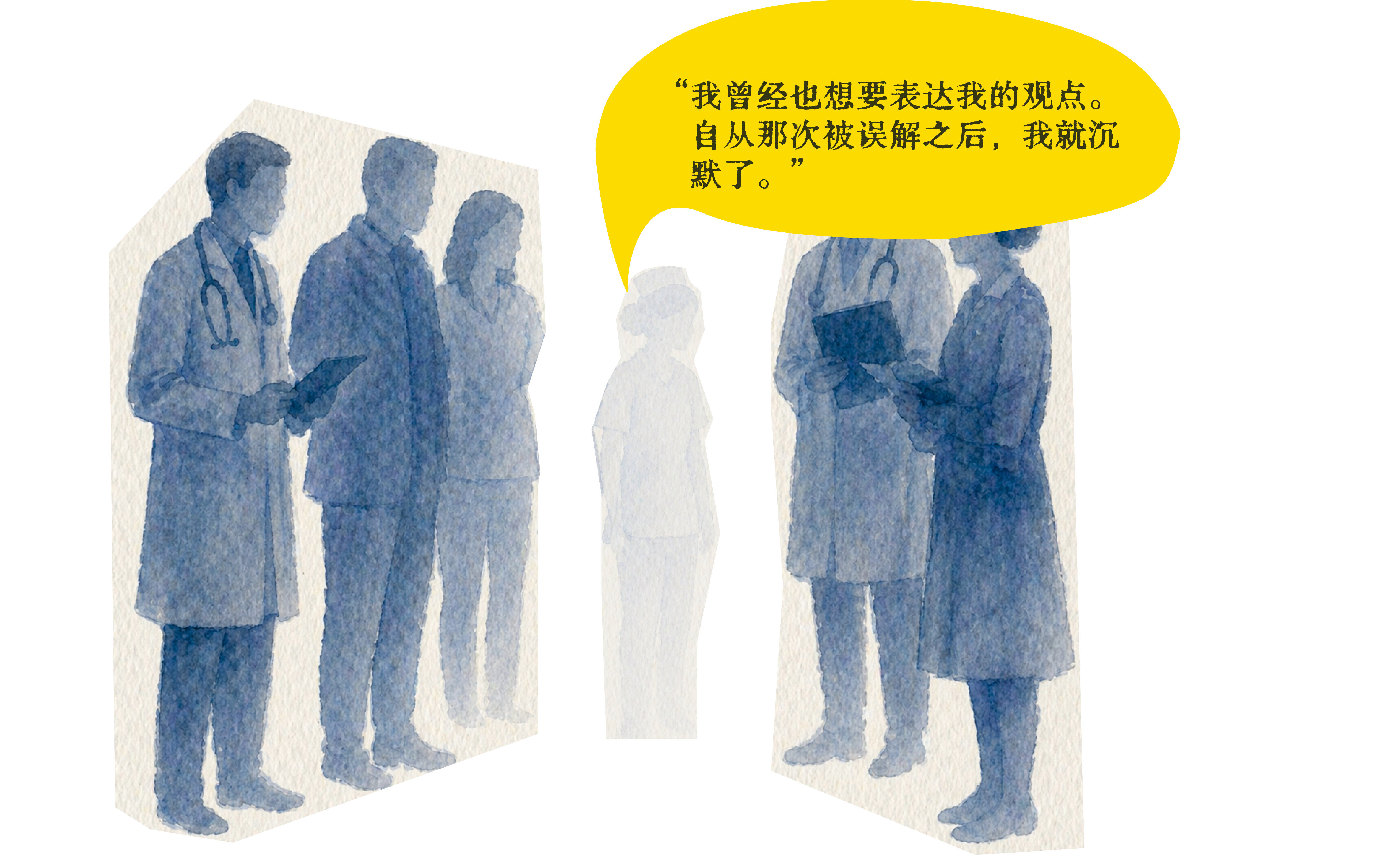
When nurses are repeatedly misunderstood—or are unsure whether they have permission to speak—their knowledge does not disappear, but it may become invisible to others.

Watercolor-style medical staff groups with a fading nurse figure between them and a yellow interview quote bubble.

Systemic Impact

138,000

Registered nurses left the U.S. workforce during the pandemic.

Silence can reduce immediate conflict, but repeated self-suppression carries a longer-term cost.

Over time, constantly monitoring what can safely be said may deepen isolation, intensify emotional strain, and contribute to burnout within an already pressured healthcare system.

Watercolor-style medical staff standing in groups while a faded nurse figure walks away to the right.

Problem Statement

Chinese immigrant nurses are not lacking English skills. They lack a safe way to understand difficult workplace situations and decide whether, when, and how to speak.

Many nurses described “just pushing through it” as the default response.

Existing support often begins only after the problem has become serious and the person is ready to ask for help. The unmet need appears earlier—when nurses are still trying to understand what happened and whether it is safe to respond.

How Might We

How might we create a private, low-risk decision-support space that helps Chinese immigrant nurses interpret workplace situations, evaluate communication risks, and decide whether, when, and how to respond?

Solution

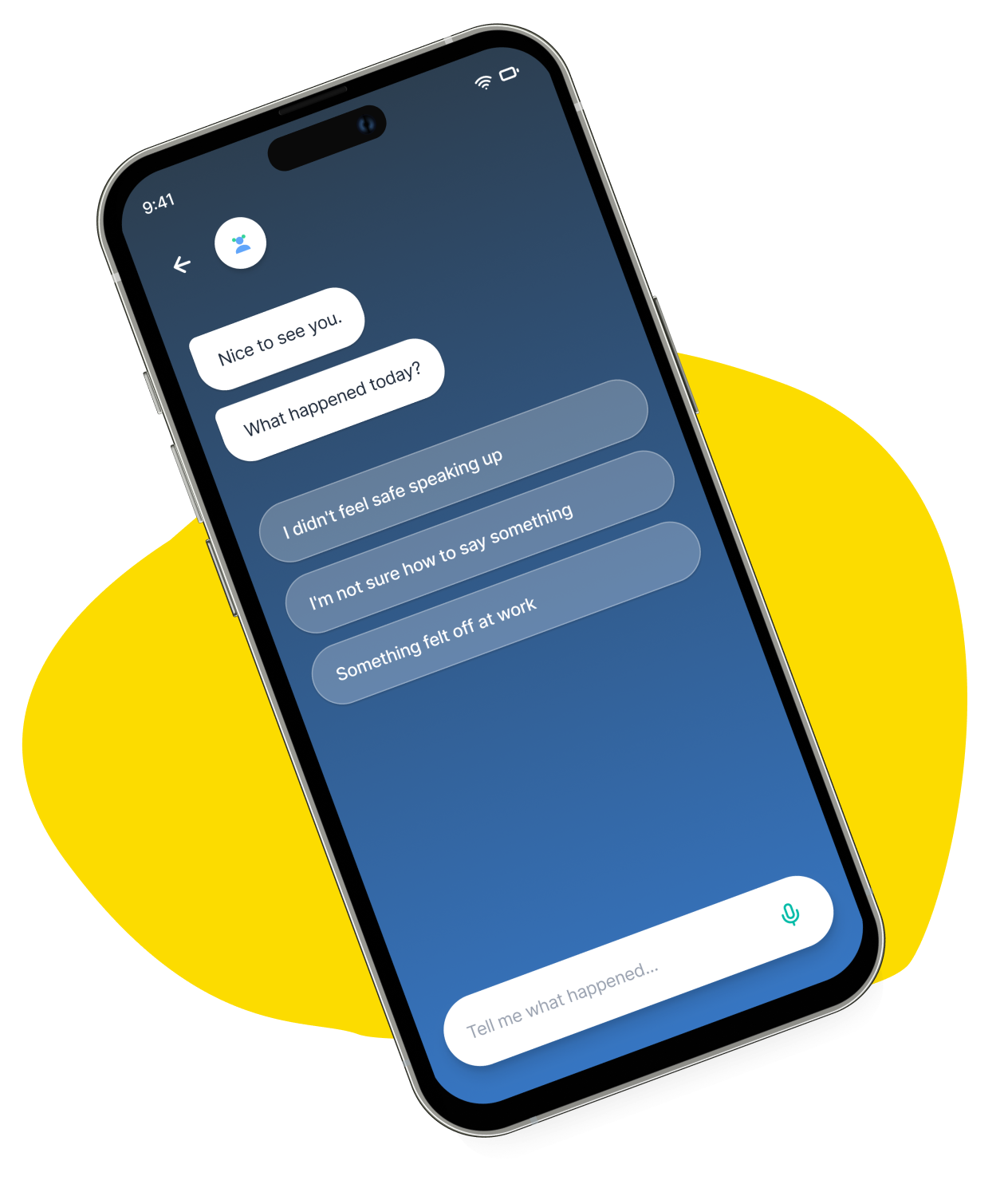
Between Care and Self mobile chat concept showing a private conversational support interface.

Between Care and Self

A private AI-assisted space to think before speaking.

The concept supports Chinese immigrant nurses in moments of workplace uncertainty. It helps users understand what they are experiencing, interpret the situation, compare possible responses, and prepare language if they choose to communicate.

It is not a diagnostic tool, a management platform, or a replacement for human support.

AI is used as a reflective medium—not a decision engine.

AI Supports

  • Organizing fragmented experiences
  • Surfacing emotional and contextual patterns
  • Making workplace dynamics more visible
  • Comparing possible responses
  • Generating adaptable language

AI Does Not

  • Diagnose the user
  • Decide whether the user should speak
  • Present one universally correct response
  • Replace human or institutional support

User Flow

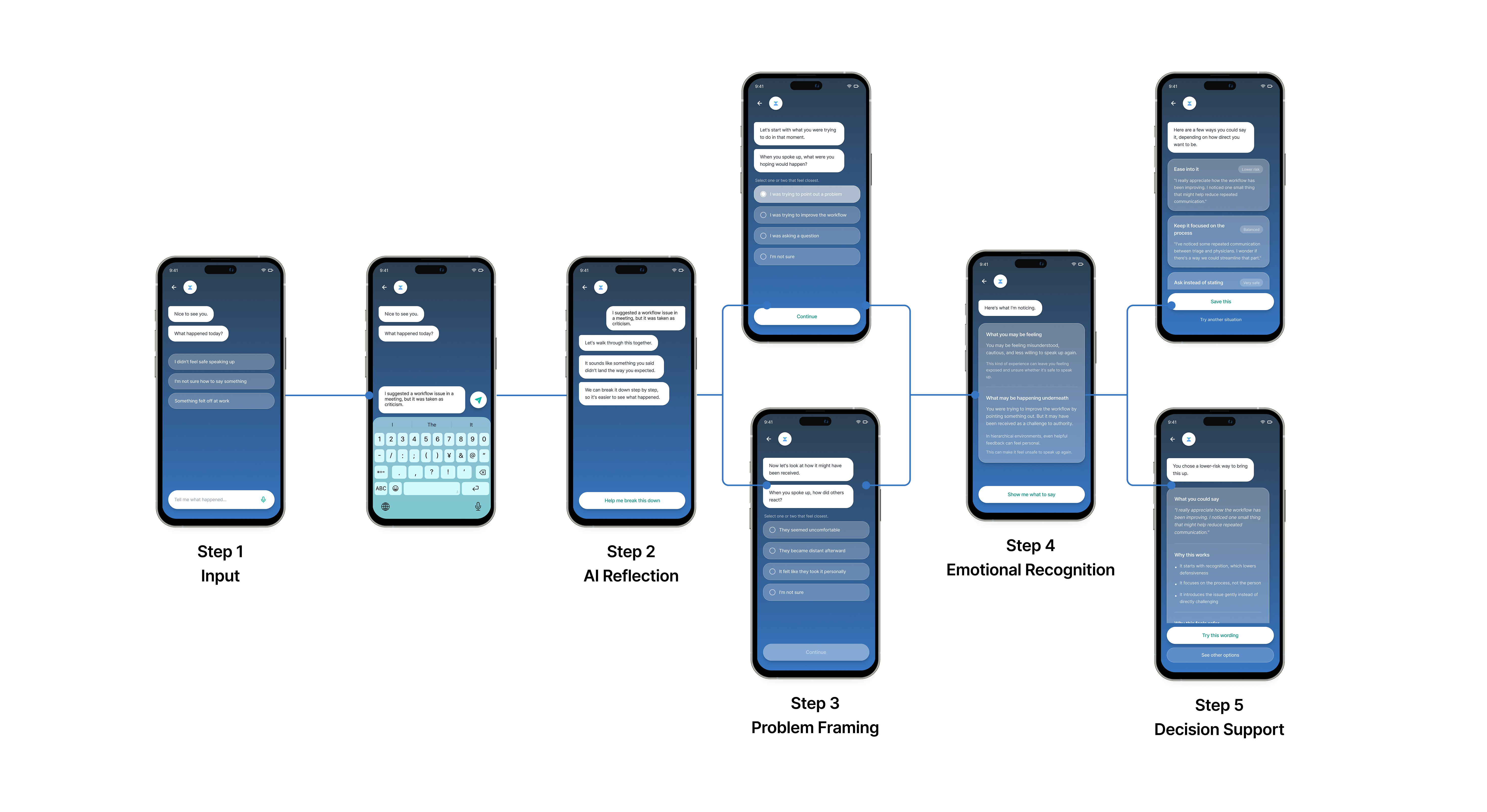
This user flow shows how Between Care and Self supports Chinese immigrant nurses through a step-by-step reflection process. Starting from a difficult workplace moment, the experience helps users describe what happened, understand intention and reaction, recognize emotional impact, and receive lower-risk communication support.

Between Care and Self user flow showing a step-by-step reflection and communication support process.

Reflection

The prototype was used to test the interaction flow, conversational tone, and how visible reasoning affected trust—not final visual polish.

The outcome is a tested Human-AI decision-support framework rather than a finished healthcare product. This project shifted my understanding of AI from an answer-generating system to a tool for interpretation and judgment.

In sensitive situations, trustworthy AI should explain its reasoning, acknowledge its limits, and preserve the user’s right to make the final decision.

Designing for judgment, not automation.